Cloud Sprawl and the Fractured Network: How Multi-Cloud Adoption Is Quietly Undermining Your Infrastructure

Photo: multi-cloud network infrastructure data center connectivity, via lenalighting.com
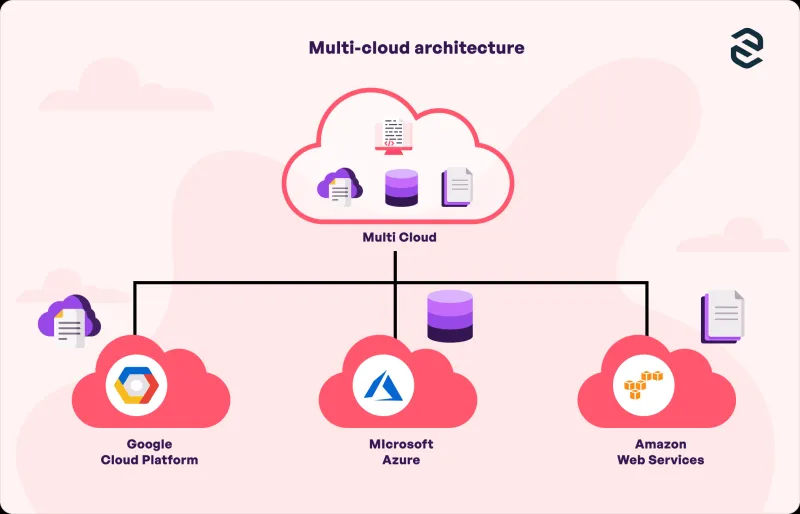
For most mid-market and enterprise organizations, the journey to the cloud was never a single deliberate leap. It was a series of pragmatic decisions made under pressure—a development team spinning up AWS workloads to accelerate a product launch, a finance department migrating to a SaaS platform to reduce licensing costs, an IT director provisioning Azure resources because a key vendor required it. Each decision made sense in isolation. Collectively, they have created something far more difficult to manage than any single cloud environment ever was.
The result is what infrastructure professionals now call cloud sprawl: a distributed ecosystem of platforms, providers, and connectivity paths that no single team fully understands, controls, or can accurately cost-account for. And at the center of this problem is the network—specifically, the absence of a coherent network strategy that was supposed to tie everything together.
How Fragmentation Happens—and Why It Accelerates
Cloud adoption tends to follow business units rather than IT architecture. Sales teams adopt CRM platforms. HR deploys cloud-based workforce management tools. Engineering builds on infrastructure-as-a-service without coordinating with the networking team. Each of these integrations introduces new traffic flows, new authentication requirements, and new dependencies that the existing network was never designed to accommodate.
What begins as manageable complexity compounds quickly. A company running AWS, Microsoft Azure, and three to five SaaS applications may find itself managing eight or more distinct network connectivity paths within two years—each with its own performance characteristics, security posture, and cost structure. Without a deliberate unification strategy, these paths do not converge. They diverge.
The consequences are measurable. According to infrastructure analysts, organizations operating fragmented multi-cloud environments spend an estimated 30 to 40 percent more on data transfer and connectivity costs than those with unified networking architectures. Performance inconsistencies emerge as traffic takes suboptimal paths between cloud regions. Security gaps open at the seams between platforms, where visibility tools from one provider cannot see into another.
The Visibility Problem Is More Serious Than It Appears
One of the most underappreciated consequences of cloud fragmentation is the loss of end-to-end network visibility. When your infrastructure spans multiple providers, your monitoring tools are often scoped to individual environments. AWS CloudWatch tells you what is happening inside AWS. Azure Monitor covers Azure. But neither tool gives you a coherent picture of how traffic moves between environments, where latency is accumulating, or whether a performance issue originates in the network fabric connecting your platforms rather than within any single cloud.
This is not merely a technical inconvenience. When a business-critical application begins degrading, the first question every IT team faces is: where is the problem? In a fragmented environment, answering that question requires correlating data from multiple dashboards, multiple log formats, and multiple provider support channels simultaneously. Mean time to resolution climbs. Business impact accumulates.
For organizations that have invested heavily in AI-driven workloads or real-time data pipelines, this visibility gap carries even greater risk. These applications are particularly sensitive to latency and throughput inconsistencies—exactly the conditions that fragmented multi-cloud networks produce.
The Networking Backbone Strategy That Changes the Equation
The enterprises that have successfully tamed multi-cloud complexity share a common architectural principle: they treat the network as the foundation of their cloud strategy, not an afterthought to it.
This means deploying a cloud-agnostic networking layer—a unified connectivity fabric that sits across all cloud environments and provides consistent routing, security policy enforcement, and observability regardless of which provider is underneath. Technologies such as SD-WAN, cloud exchange interconnects, and network-as-a-service platforms are central to this approach.
Specifically, organizations are implementing several key practices:
Centralized network policy management. Rather than configuring security groups and routing tables independently within each cloud provider's console, leading organizations define network policies in a single control plane that pushes configurations consistently across AWS, Azure, Google Cloud, and any SaaS integrations. This eliminates the configuration drift that creates security vulnerabilities and performance anomalies.
Private interconnects over public internet transit. Routing inter-cloud traffic over the public internet is both a performance liability and a security risk. Cloud exchange providers and dedicated private connectivity services—such as AWS Direct Connect or Azure ExpressRoute—offer predictable latency and reduced exposure. A unified network strategy consolidates these connections through a single interconnection point rather than managing them independently.
Unified observability tooling. Deploying network performance monitoring tools that ingest telemetry from all cloud environments into a single pane of glass is no longer optional for organizations operating at scale. Solutions built on open telemetry standards allow IT teams to correlate performance data across providers and identify issues before they reach end users.
The Cost Discipline Argument
Beyond performance and security, the financial case for network unification is compelling. Cloud providers charge for data egress—traffic leaving their environments. In a fragmented architecture, data frequently traverses provider boundaries unnecessarily, generating egress fees that accumulate invisibly across dozens of workloads.
Organizations that architect their network to minimize cross-provider data movement—by colocating interdependent workloads within the same provider or routing traffic efficiently through private interconnects—routinely identify five-figure monthly savings that were previously invisible in their cloud billing.
The Strategic Imperative
The question for US businesses in 2025 is not whether to operate in a multi-cloud environment. That decision has, for most organizations, already been made by circumstance. The question is whether the network architecture supporting that environment was designed with intention or assembled by accident.
Cloud providers have strong incentives to keep your workloads within their ecosystems. They do not have strong incentives to help you build a coherent network strategy across their competitors' platforms. That responsibility falls to your organization—and to the infrastructure partners you choose to work with.
A fragmented network is not a permanent condition. It is an architectural problem with architectural solutions. The businesses that address it proactively will find that their cloud investments begin delivering the agility and efficiency they were originally promised. Those that continue to add cloud services without a unifying network strategy will find the gap between their cloud ambitions and their operational reality growing wider with every new platform they adopt.
The infrastructure decisions made today will define the operational ceiling of your business for the next several years. Building on a unified network backbone is not a technical preference—it is a strategic necessity.